
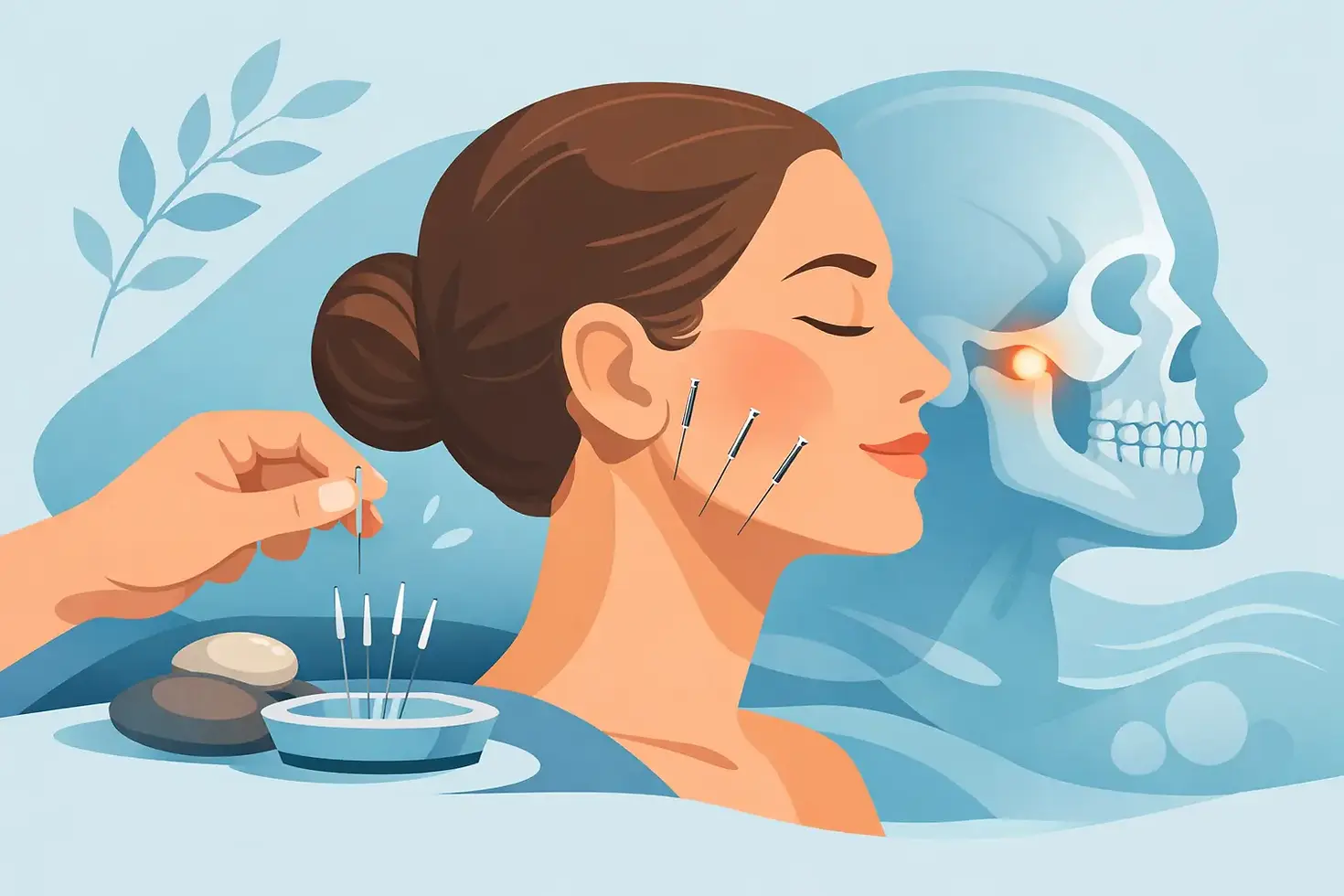
Can Acupuncture for TMJ Pain Ease Jaw Tension?

A jaw that clicks, catches or aches can make ordinary moments feel exhausting. Chewing lunch, speaking in meetings or waking with a tight face can all become reminders that something is not settling. Acupuncture for TMJ pain offers a natural, personalised approach for people dealing with jaw tension, teeth grinding, headaches and facial discomfort - particularly when stress is part of the picture.
TMJ symptoms are rarely only about the jaw. At KO Healing Acupuncture, treatment considers the muscles of the face, neck and shoulders, your stress response, sleep quality and the patterns that may be keeping discomfort active. The goal is practical: reduce pain and tension, support healthier jaw movement and help you feel more comfortable day to day.
What TMJ pain can feel like
TMJ refers to the temporomandibular joints, the two small joints connecting your lower jaw to the skull. They work alongside a network of muscles and ligaments every time you chew, swallow, speak or yawn. When the joint or surrounding tissues become irritated, symptoms can extend well beyond the jaw itself.
You may notice a dull ache near the ear, tenderness through the cheeks or temples, clicking or popping, difficulty opening your mouth fully, or a feeling that the jaw is locking. Some people also experience tension headaches, ear fullness, neck pain or facial pain. Night-time clenching and grinding can leave the jaw particularly sore on waking.
There is not always one clear cause. Stress can increase unconscious clenching, while prolonged desk work may tighten the neck and shoulder muscles that influence jaw mechanics. Dental work, chewing gum frequently, an uneven bite, injury, poor sleep and joint changes can also contribute. This is why a treatment plan needs to be individual rather than based on a one-size-fits-all set of points.
How acupuncture for TMJ pain may help
From a Traditional Chinese Medicine perspective, pain and tightness can reflect disrupted circulation and tension along pathways that travel through the face, head, neck and body. Acupuncture is used to encourage circulation, relax overactive muscles and support the body’s ability to regulate stress.
In modern terms, fine acupuncture needles may help modulate pain signalling and influence the nervous system. Treatment can encourage a shift away from the heightened fight-or-flight state that often fuels clenching. By working with local jaw and facial muscles, as well as carefully selected points on the hands, arms, legs and scalp, acupuncture may also help reduce muscle guarding without placing extra strain on a sensitive joint.
For many people, the benefit is not simply a less painful jaw. When jaw tension is closely linked with stress, treatment may support deeper rest, fewer tension headaches and a greater awareness of when clenching starts. That awareness matters because it gives you a chance to interrupt the habit during the day.
Results vary. Acupuncture may be especially useful where muscle tension, stress, headaches or grinding are driving symptoms. If pain is caused by significant joint degeneration, a displaced disc, infection or a dental problem, acupuncture may still be supportive but should sit alongside appropriate dental or medical care.
Your treatment begins with the bigger picture
A thorough consultation helps identify what is contributing to your symptoms. Your practitioner will ask when the pain began, whether the jaw clicks or locks, where you feel tension, how you sleep and whether you wake with headaches or a sore jaw. Stress, work posture, exercise, digestive health and menstrual or hormonal changes may also be relevant, as these can affect muscle tension and recovery.
The jaw, scalp, neck and shoulders may be gently assessed to identify areas of sensitivity and restricted movement. Treatment intentions are then explained clearly. For one person, the priority may be settling acute pain after a period of heavy clenching. For another, it may be reducing recurring headaches while improving sleep and managing ongoing stress.
Needles are very fine and most people find the experience comfortable. You may feel a brief sensation on insertion, followed by heaviness, warmth or a gentle spreading feeling around the area. Needles are generally retained while you rest in a calm treatment setting. Depending on your presentation, treatment may also include heat therapy, gentle cupping away from the jaw area, acupressure, or Chinese herbal medicine where clinically appropriate.
What a personalised plan may involve
TMJ pain often responds best to a short series of consistent treatments rather than a single appointment. Early sessions may focus on reducing pain and relaxing the muscles. As symptoms settle, the plan can shift towards supporting resilience, improving sleep and reducing the frequency of clenching episodes.
The right frequency depends on the severity and duration of your symptoms. Acute jaw pain may need closer appointments initially, while long-standing tension can require a steadier approach over several weeks. Your practitioner should review changes in pain, jaw opening, headaches, sleep and daily function, then adjust treatment accordingly.
Between appointments, a few small changes can make treatment more effective. Avoiding chewy foods and gum while the joint is irritated can give the jaw a break. A warm compress may ease muscular tightness, while slow breathing with the tongue resting softly on the roof of the mouth can help relax the jaw. If you work at a computer, regular posture breaks are valuable - a forward head position can place added load through the neck and jaw.
A night splint may be recommended by your dentist if grinding is significant. Acupuncture does not replace dental assessment, especially where there is tooth wear, bite changes or suspected joint damage. It can, however, be a useful complement to dental management by addressing muscular tension and stress-related contributors.
When to seek further assessment
Jaw discomfort deserves proper attention when it is persistent, worsening or affecting eating and speaking. See a dentist, GP or appropriate specialist promptly if your jaw becomes locked, you cannot open your mouth normally, there is facial swelling, fever, recent trauma, severe tooth pain, numbness or unexplained weight loss. These symptoms need assessment to rule out conditions that require other treatment.
It is also worth discussing TMJ symptoms with a dentist when you notice cracked teeth, worn enamel, gum pain or a marked change in your bite. A coordinated approach is often the most sensible path: dental care for structural and tooth-related concerns, and acupuncture to support pain relief, muscle relaxation and stress regulation.
A calmer approach to jaw pain
Living with a tight, aching jaw can affect far more than meals. It can interrupt sleep, concentration, mood and confidence in social settings. A carefully tailored acupuncture plan offers a gentle way to address the broader patterns that may be keeping TMJ pain active, while giving your body space to settle.
If you are ready for a natural healing approach that is clear, considered and focused on real outcomes, booking a consultation can be a positive first step towards a more relaxed jaw and easier everyday movement.


Comments