
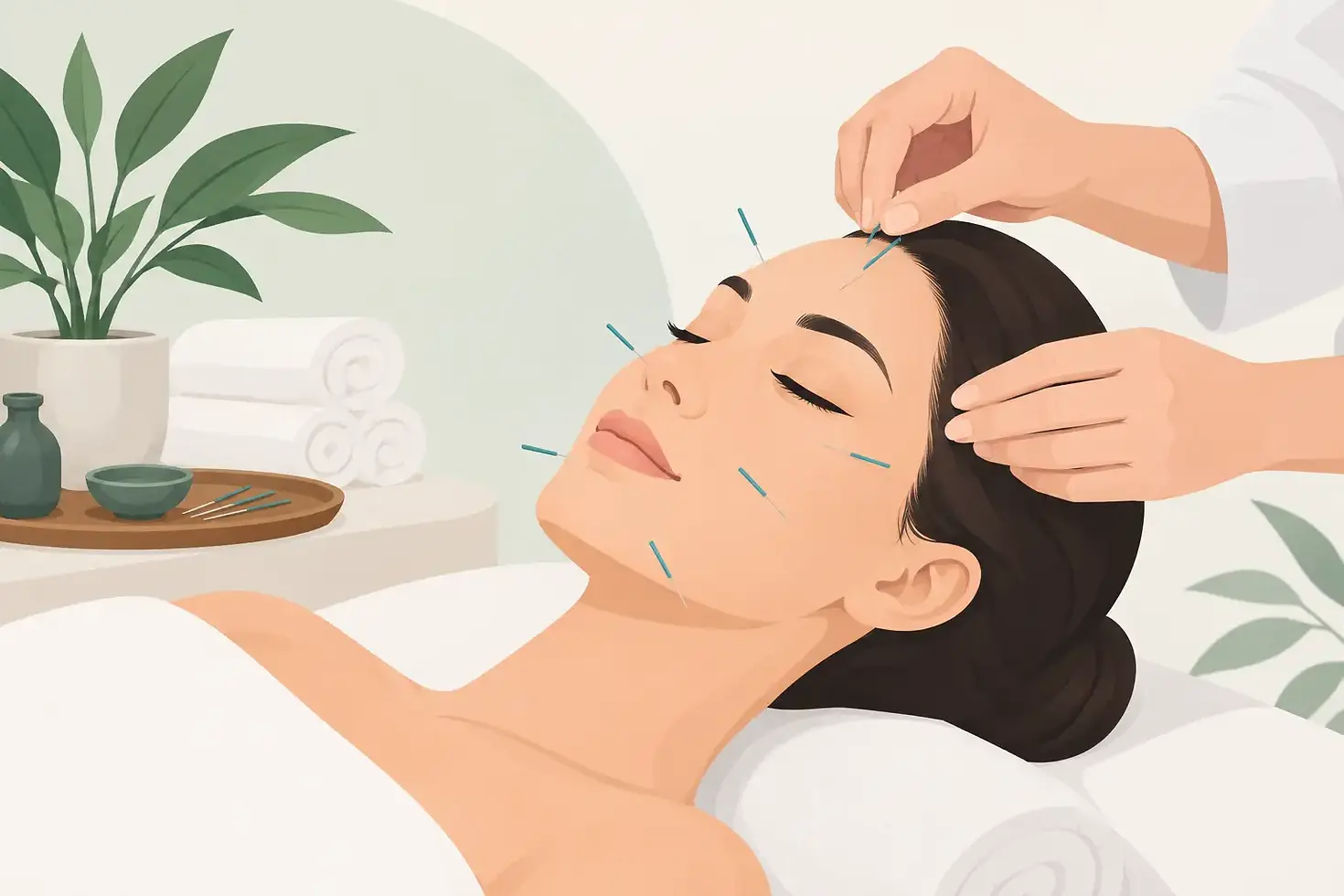
Facial Rejuvenation With Acupuncture Explained

A face can begin to look tired long before a person feels ready to make major cosmetic changes. Fine lines, puffiness, a dull complexion and tension through the jaw or brow are often influenced by more than skin alone. Facial rejuvenation acupuncture takes a whole-body view, supporting the skin while also considering sleep, stress, digestion, hormones and circulation.
For people who want a natural approach to healthy-looking skin, the goal is not to change who you are. It is to support a fresher, more rested appearance that still looks like you. Treatment is personalised, gradual and designed around your skin concerns as well as the health factors that may be contributing to them.
What is facial rejuvenation acupuncture?
Facial rejuvenation acupuncture is a treatment that uses very fine, sterile needles at selected points on the face and body. In Traditional Chinese Medicine, these points are chosen to help improve the flow of Qi and blood, support organ systems connected with skin health, and ease patterns of tension or imbalance.
From a modern perspective, gentle needling may stimulate local circulation and encourage the body’s natural repair processes. It can also help release overactive facial muscles, particularly around the forehead, brows and jaw. When muscles remain tight, expression lines can become more pronounced and the face may appear drawn or fatigued.
A facial treatment is rarely only about the face. Breakouts, redness, puffiness and lacklustre skin can be affected by poor sleep, chronic stress, digestive discomfort, menstrual changes and inflammation. Addressing these broader patterns can make treatment more purposeful than simply focusing on a single line or area.
What concerns can facial rejuvenation support?
People seek facial acupuncture for different reasons. Some want support for fine lines and loss of facial tone. Others are concerned by jaw tension, stress-related frowning, under-eye puffiness, uneven texture or skin that no longer looks as bright as it once did.
Treatment may support a healthier complexion by encouraging circulation and helping the face look less congested or tense. It can be especially appealing for people who prefer to avoid injectables, or who would like a complementary approach alongside a considered skincare routine.
That said, facial acupuncture is not a replacement for every cosmetic procedure. Deep static wrinkles, significant volume loss and skin laxity may require different options if dramatic change is the goal. A realistic conversation is part of responsible care. Acupuncture tends to suit people looking for gradual, natural-looking improvement rather than an overnight transformation.
Why the whole body matters for skin health
Your skin is often one of the first places that internal strain becomes visible. A stretch of poor sleep can leave the face puffy and dull. High stress can contribute to jaw clenching, forehead tension and flare-ups. Digestive symptoms, irregular bowel habits and hormonal shifts may also affect how the skin behaves.
In Chinese medicine, the face is viewed as connected to the wider health of the body. A practitioner may ask about energy, appetite, digestion, periods, stress levels, sleep quality and medications before creating a treatment plan. This is not a detour from cosmetic care. It helps identify the factors that could be making the skin look tired, reactive or congested.
For example, someone with persistent jaw tension may benefit from treatment focused on facial muscles, stress regulation and neck or shoulder tightness. Someone experiencing dry, lacklustre skin during a demanding period of work or postpartum recovery may need a plan that supports rest, nourishment and overall recovery as well as local facial points.
What happens during a treatment?
Your first appointment begins with a detailed consultation. At KO Healing Acupuncture, treatment goals are discussed clearly so you understand what the plan is intended to support, how often treatment may be recommended and what changes are realistic to look for.
Needles used for facial acupuncture are extremely fine. Most people describe the sensation as minimal, with occasional brief tingling, warmth or a heavy feeling around a point. Needles may be placed in areas of facial tension or concern, as well as points on the scalp, arms, hands, legs or feet that support the broader treatment strategy.
Depending on your needs, treatment may also include gentle facial massage, gua sha, Chinese herbal medicine or lifestyle guidance. These additions are not automatically included for everyone. They are selected when they fit your presentation, preferences and health history.
After a session, many people feel deeply relaxed. Mild redness, a small bruise or temporary tenderness at a needle site can occur, particularly if you bruise easily. These effects are usually short-lived. Your practitioner should explain aftercare and let you know what is normal to expect.
How many sessions are needed?
Facial rejuvenation is best approached as a course of care rather than a one-off appointment. Skin turnover, muscle patterns and internal health changes take time. The number of sessions depends on your age, skin condition, lifestyle, stress levels and the goals you bring to treatment.
A common approach may involve weekly treatments for an initial period, followed by less frequent maintenance sessions. Some people notice that their face feels more relaxed or looks brighter after the first few appointments. Changes in fine lines, tone and texture are generally more gradual.
Consistency matters, but so do the basics between sessions. Hydration, nourishing meals, daily sun protection, good-quality sleep and stress management all influence the condition of the skin. A personalised treatment plan should work with your real life, not demand an unrealistic routine.
Is facial acupuncture safe for everyone?
When performed by a suitably qualified practitioner using single-use sterile needles, acupuncture is generally well tolerated. However, a full health assessment is essential. Tell your practitioner if you are pregnant, have a bleeding disorder, take blood-thinning medication, have a skin infection, are prone to fainting, or have recently had cosmetic injectables or facial surgery.
Timing matters if you are combining treatments. It may be appropriate to space facial acupuncture around injectables, laser procedures, skin needling or other cosmetic services. Your practitioner can help you plan care conservatively and advise when medical clearance may be needed.
It is also worth being cautious of promises that sound too good to be true. Natural healing can be highly supportive, but it should not be presented as a guaranteed facelift or a cure for every skin concern. The best outcomes come from a thoughtful assessment, safe treatment and expectations grounded in what your body can realistically achieve.
Choosing a natural approach with clear intentions
The appeal of facial acupuncture is not only that it is needle-based and non-surgical. It is that the treatment can make space for the factors conventional cosmetic appointments may not have time to explore. The quality of your sleep, the tension you carry in your face, the pace of your work and the way your digestion is functioning can all matter.
If you are considering facial rejuvenation, begin with a consultation rather than committing to a fixed package. Bring your questions, your current skincare products and an honest picture of what you would like to improve. A good plan will be specific about what it can support, what may take time and where another health professional or treatment option may be more appropriate.
Healthy-looking skin is rarely built through one dramatic intervention. It is often the visible result of steady care, better recovery and treatment that respects both your appearance and your overall wellbeing. When your treatment plan supports both, you can feel confident that the goal is not simply to look different, but to feel more like yourself.


Comments